Provide Feedback
Home>>>

Cordless Driver Product Guide

Top Products
Recent Reviews
Jun
3
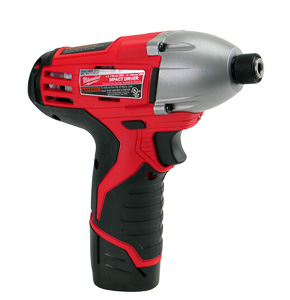
The Milwaukee 2450 impact driver found its way into our shop as part of a kit that included a far more interesting tool. It's specs are equally unimpressive. The dollar amount at the bottom is what made us take note.

The 2450 is a bargain price driver from one of the big four tool manufacturers. Always the curious kind we had to figure out what that actually meant. Let's take a closer look, shall we?
...
Apr
23
We have been trying to get our hands on a Milwaukee Tool 2453-22 cordless impact driver for some time now. In our opinion it is the most exciting new impact driver that is coming out this year. Instead of going big, Milwaukee created a smaller, full-featured impact driver. Let's see what brushless motor technology can do for driving screws.

The Milwaukee Tool 2453-22 Cordless Impact Driver ...
Mar
28
Not everyone needs a driver that can work hard all day long. The drivers that can do that are big, heavy, and expensive. When you are doing work around the house all those properties are undesirable. A small, light, and cheap driver is a much better tool in those circumstances. The Black&Decker LDX112C is such a tool. It promises to deliver the pro-tool feel in a smaller, less expensive package. Let's take a look, if the LDX112C can indeed ...
Jan
31
We here at Hingmy are just as vulnerable to gadgets and cool stuff as the next person. When something is shiny and new we want to have it in our shop. The Worx WX254L screwdriver with its semi-automatic loader caught our attention for that very same reason. While buying power tools from a TV infomercial is usually not a good idea, we made an exception for this one. Let's take a look at what the Worx WX254L screwdriver can do in our shop. ...
Dec
9
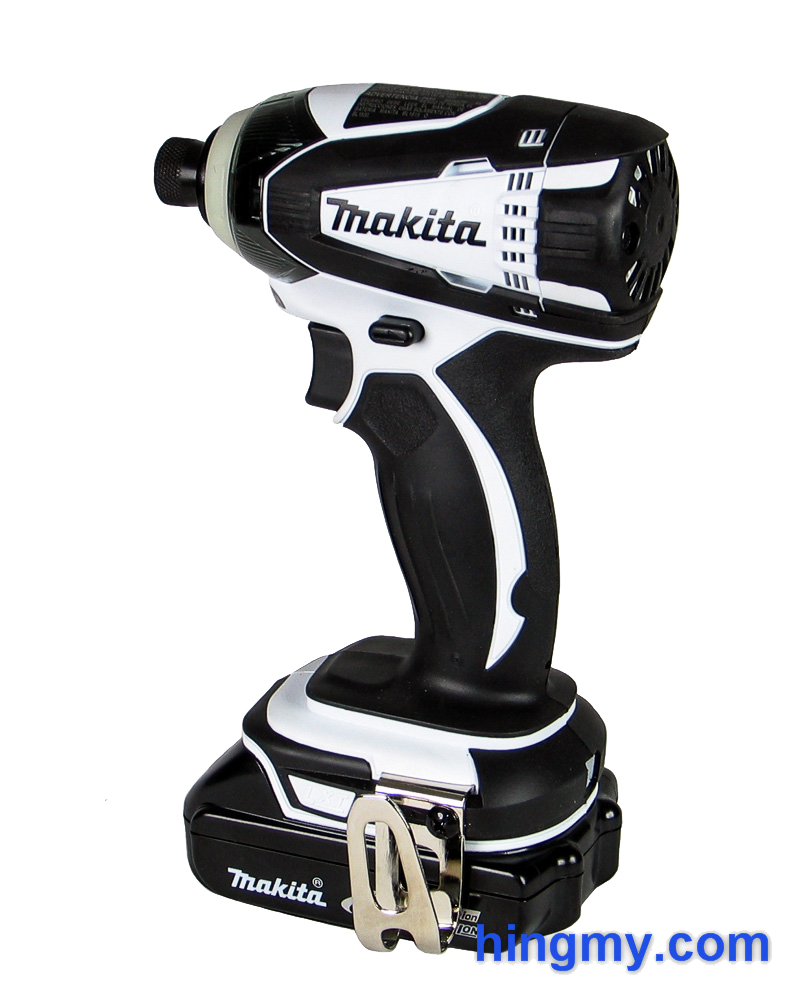
Over the years Makita has built an impressive tool lineup for its excellent 18V battery system. This system offers more choices than any other battery system available today. The LXDT04CW impact driver fills the spot of the compact, yet powerful everyday driver in the lineup. Let's take a look at how it did in our shop.

The LXDT04CW impact driver
Unlike most ...
Cordless Driver Guide

Overview

Drivers excel at driving screws, bolts, and other fasteners. They outperform cordless drills when driving screws both in terms of driving power and ease of use. Large drivers can be used to drive lug nuts and industrial size nuts and bolts.

Drivers differ from drills in the amount and type of torque they deliver. Driving a screw requires high, burst-like torque. Drills produce continuous torque. A driver puts much less strain on the user's hand than a drill used for driving screws produces. For the best user experience it's best to purchase a separate drill and driver.

The Drill/Driver

Manufacturers understand the desire of users to have a single tool that performs well as a drill and a driver. This tool is the drill/driver. It has more torque than a drill to drive screws, and a friction chuck to mount drill bits. To get the torque up the tool has to spin slower, which hurts drilling performance. The friction chuck makes it harder to install hex bits.

A drill/driver is a good choice for a seldom used tool. In these scenarios the design quirks of the tool are not going to slow the work down much. If you want a tool to keep around your house for the occasional repair, a drill/driver is a good choice. On large jobs a drill/driver is going to slow you down.

Pure Drivers

Pure drivers prioritize torque over everything else. They provide the smoothest fastener driving experience available. All that power allows a driver to break lose fasteners much more reliably than other tools. Good drivers focus the torque on the fastener keeping the hand of the user as still as possible. After a day of work you'll feel the difference.

The hex chuck is the default choice for such a tool. It makes the installation of bits an operation that takes a couple of seconds at best. Replacement bits are cheap and interchangeable between manufacturers.

Makita LXDT04CW Impact DriverShopping Guide

1) Choose a chuck

A driver with a 1/4" hex chuck is the best choice for driving screws. A wide variety of bits exist to drive just about any type of screw with this tool. Bit changes take only seconds.

A square chuck driver is the better choice for driving nuts and bolts. The square chuck is bulkier and more powerful. This provides the power necessary for driving large fasteners. They are found on Impact Wrenches.

2) Choose a level of power

The next most important consideration is the driver's torque. Drivers with 80ft-lbs of torque or more are able to drive screws in just about any situation. 100ft-lbs of torque or more are recommended for frequent users. Driver's with less than 80ft-lbs are best for occasional use.

As little as 8 ft-lbs of torque is required to sink a 3 inch screw into framing members. A tool like this will get the job done, but it'll do so slower and with less control. For home use just about any driver is powerful enough.

For automotive applications 300ft-lbs or more are required. Below that number, the tool will not be able to loosen stubborn lug nuts.

3) Select a battery type

The most important consideration when choosing a battery is the lineup of tools that the battery fits in. Your driver is only one tool in your collection. Even if you do not plan on purchasing another tool it is best to plan for the future and choose a battery that is part of a well established system.

The type and size of the driver's battery defines its endurance. Lithium-Ion battery technology is the most advanced at present. This type of battery will drive the most screws per charge. The other technologies lag behind, but are not necessarily without merit.

Next choose a battery size. Larger batteries hold more energy, but they also weigh a lot more. A driver with a smaller battery pack is easier to handle than one with a large pack. Smaller battery packs have to be changed more often than larger ones.

Milwaukee 2450 Impact Driver4) Choose a tool size

Drivers come in different physical sizes. The larger ones are usually made to perform on a jobsite all day long. These tools have the physical heft necessary to manage the internal heat created by driving hundreds of deck screws. Their weight makes them hard to control when doing fine work, especially for weaker users.

Smaller driver don't necessarily have less power than larger ones. The difference will only become apparent after driving the 50th screw of the large project. If your project ends before you get there, you can enjoy the maneuverability of a much lighter tool. A small driver is particularly useful for doing home repair and in the shop for cabinet work.


Cordless Drivers by Max torque

Products:133
Average:73ft-lbs
0ft-lbs
50ft-lbs
100ft-lbs
150ft-lbs
No Data: 8
You may like
"Awesome combo of high power and low weight. Commercial performance and quality all around. The chuck-less tip takes some getting used to. A step forward."
Most Viewed
"This driver has the power to do it all, yet is smaller than the previous generation. It should be on your toolbelt. It is that good."

Cordless Drivers - Properties

twitter.com/HingmyTools Google Plus facebook.com/HingmyTools